Everyday Comfort
1/19/20264 min read
Gentle Movement & Daily Support During Menopause: What Helps My Body Feel Better Throughout the Day
One thing I didn’t expect during menopause was how tight, heavy, and achy my body could feel — sometimes before the day even started.
It wasn’t about needing a hard workout or doing more.
It was more about my body needing to warm up, move gently, and feel supported.
Over time, I’ve found that short, intentional habits — spread throughout the day — make a much bigger difference than pushing myself or following rigid routines. This is what my days usually look like, and why they help.
How I Start My Morning (Gently)
The first thing I do in the morning is simple: I make a hot mug of water.
It doesn’t sound exciting, but it’s become one of my favorite quiet moments. The warmth helps wake my system up gently, without stimulation.
While I’m drinking my hot water, I step onto my vibration plate for about 15 minutes. The gentle vibration helps with circulation and lymphatic flow. While the hot cup of water helps hydrate and help with digestion.
This combination — warmth, gentle vibration, and calm input — helps my body feel less stiff right from the start and sets the tone for the day.
Morning Yoga: Short, Consistent, and Supportive
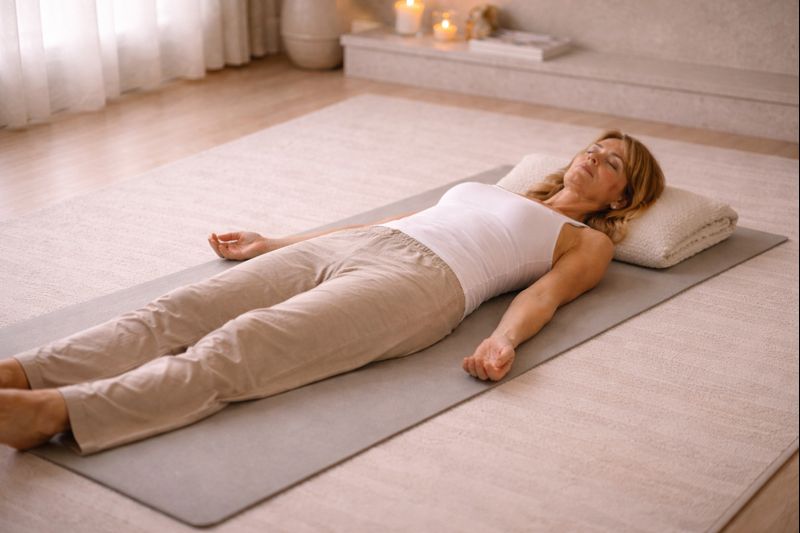
After the vibration plate, I move straight into yoga.
This isn’t a long or intense practice. Most days it’s about 20 minutes, on my mat and that’s enough. The goal isn’t to push or perfect anything — it’s to help my body open up and not feel so tight. During this time, I also turn on my red light therapy lamp and let it shine on me while I’m moving gently.
This combination has made a noticeable difference for me — especially in how my joints and muscles feel. The red light adds another layer of support that feels soothing rather than intense.
Yoga helps me:
warm my joints
ease stiffness
feel more comfortable moving through the day
I usually stick with one instructor I enjoy, simply because familiarity helps. I don’t want to think too much in the morning — I just want to move in a way that feels supportive.
Supporting My Body After Sitting All Day
Like many people, I spend a lot of time sitting at a desk. By late afternoon, I can feel it — especially in my legs and lower body.
This is when I choose one of two things, depending on what my body needs that day:
Some days, I use a walking pad at my desk for 30 minutes to an hour. It’s steady, gentle movement that helps circulation without draining my energy.
Other days, especially after work, I’ll spend 15–20 minutes on my rebounder. This isn’t intense bouncing — just light, rhythmic movement that helps with lymphatic drainage and that heavy, sluggish feeling that can build up after sitting.
I don’t do both.
And I don’t do this perfectly.
I simply choose what feels right that day — and that flexibility matters.
Hydration as Quiet Daily Support
I don’t follow strict hydration rules, but I am intentional about it.
I keep a large water bottle nearby and refill it throughout the day. When I’m under-hydrated, my body lets me know — more stiffness, more fatigue, more discomfort.
Staying hydrated quietly supports everything else I’m doing: movement, circulation, and overall comfort.
Tea as a Calming Rhythm
Along with water, tea is part of my daily rhythm.
I often drink green tea earlier in the day, because it helps with digestion and feels grounding. Later on, I switch to caffeine-free herbal teas, especially in the afternoon and evening.
Tea feels like a pause — something calming and supportive rather than stimulating.
Listening to the Body & Nourishing the Vessel
What I’ve learned through all of this is that it’s not really about what the food is — it’s about how I treat my body.
Menopause has made me more aware of when my body feels supported and when it doesn’t. Instead of following rules or chasing a “perfect” way of eating, I focus on listening and responding with respect.
For me, that means nourishing my body in ways that feel steady and kind.
I prep simple breakfasts ahead of time — things like baked oats or a tofu scramble — not because they’re “right” foods, but because they help me start the day grounded and without stress. Lunch is similar: wraps, soups, or leftovers that are easy to grab and don’t require much thought.
At night, I slow down more intentionally. I make dinner using healthy, colorful ingredients, and I let it feel satisfying and enjoyable — not heavy, not restrictive.
And I don’t aim for perfection.
I have coffee every day. I make a latte at home with soy or almond milk and a bit of syrup, and I enjoy it. I eat sweets sometimes. I don’t punish myself for it.
For me, nourishment is about respecting the body as a vessel — giving it what helps it feel supported, without guilt or rigidity. That mindset alone has made a noticeable difference in how my body feels day to day.
What Matters Most: Consistency Without Pressure
I don’t do all of these things every day.
Some days it’s yoga.
Some days it’s rebounding.
Some days it’s just hydration and gentle movement.
Even 15 minutes counts.
Even one supportive habit counts.
This isn’t about discipline — it’s about responding to the body with care.
How This Connects Back to Better Sleep
When my body feels less stiff and less inflamed during the day, nights are easier.
This kind of daily support works quietly in the background — making it easier to relax in the evening and settle into rest. Paired with a calm sleep environment and a gentle wind-down routine, it creates a rhythm that feels supportive instead of overwhelming.
Final Thought
Menopause doesn’t require more control.
It requires more awareness, gentleness, and respect.
Short movement, hydration, simple nourishment, and listening to your body can go a long way in helping you feel more comfortable in your own skin.
Take what feels good.
Leave the rest.content

Some links on this site are affiliate links, which means I may earn a small commission at no extra cost to you. I only share things I genuinely use and find helpful.
Finding Calm and Cool @2025